
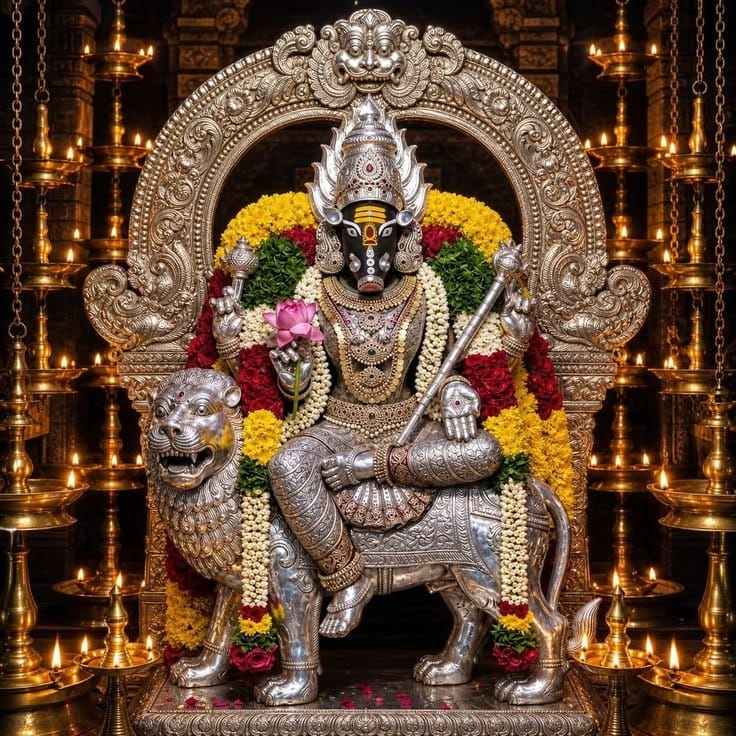
Who is Goddess Varahi Devi?
In the Indian spiritual tradition, the Divine Shakti takes many forms according to the needs of the time, and each form is worshipped as the Divine Mother. Goddess Varahi Devi is the fierce form of this Divine Shakti, who appeared to destroy demonic forces and is the presiding deity of the Tantric tradition. While Goddess Shyamala represents the gentle side of the Supreme Shakti, Varahi represents its fierce and powerful side. She is the commander-in-chief of Goddess Lalita Parabhattarika’s divine army — all chariots, elephants, cavalry, and military powers work under her command, which is why she is respectfully called Dandanatha, the wielder of divine authority. The Devi Kavacham prays “Ayu Raksatu Varahi” (“May Varahi protect our life-force”), and she is regarded as the protector of vital energy and the deity of the Ajna Chakra (the centre between the eyebrows). Within every human being, her energy resides in the navel region and governs the Manipura, Swadhisthana, and Muladhara chakras, giving inner strength, vitality, and stability.
Origin of Varahi Devi in the Puranas
Lord Varaha, the boar incarnation of Mahavishnu, killed the demon Hiranyaksha and rescued the Earth. Goddess Varahi is the feminine power (Shakti) of this Varaha form. Her stories appear in the Devi Bhagavatam, Markandeya Purana, Varaha Purana, and other sacred texts, where she destroys demons like Andhakasura, Raktabija, and Shumbha-Nishumbha. According to the Markandeya Purana, when Goddess Durga created the Matrikas (mother goddesses) to kill Raktabija, Varahi emerged from Lord Varaha, rode upon a corpse, and destroyed demons with her tusks; she is also the guardian of the northern direction and uses a buffalo as her vehicle. The Vamana Purana says she emerged from the back portion of Goddess Chandika and is seated on Adishesha, the cosmic serpent, while the Matsya Purana states that Lord Shiva created her to help destroy the demon Andhakasura.
What Makes Varahi Devi Worship (Upasana) Different?
Varahi Devi worship is not simple devotion like the worship of Rama, Krishna, Ganesha, or Lakshmi, where prayer, offerings, and surrender are the main practices. Varahi Upasana is a disciplined path of Shakti Sadhana (cultivating divine energy), inner contemplative worship, and Tantric practice. It gives special importance to mantras, yantra worship, precise rituals, and the sacred guru-disciple tradition. Its main goals are protection and the awakening of inner spiritual power — devotees seek freedom from fear, removal of obstacles, courage, and protection from negative forces, and also victory over inner enemies like desire, anger, greed, and delusion. Because the mantras and tantric energies are powerful, guidance from a qualified Guru is considered essential. Night worship is another special feature, as night is seen as a time of heightened spiritual energy — though such practices should be done only under a trained Guru’s guidance.
Looking for a room in Tirupati?
The Deeper Meaning of Varahi Upasana
Varahi Devi worship is not just a ritual tradition but a spiritual journey that transforms the seeker from within. More than external rituals, it emphasises inward meditation, mind control, and inner transformation, cultivating courage, decisiveness, and self-confidence in the practitioner. As a fierce yet compassionate Mother, Varahi destroys fear, removes ignorance, and awakens the hidden power of consciousness, guiding the devotee from inner darkness to fearless living. Ultimately, Goddess Varahi teaches an eternal truth: divine power is not separate from the seeker but lies dormant within every soul. Those who surrender to her with sincerity and steadfast faith receive not only protection and strength, but also a deeper experience of the Divine Presence within and around them.
Varahi Devi Matras:
Chanting the Varahi Devi mantra “Om Varahi Namah” is believed to remove fear, black magic effects and hidden enemies.
1. Varahi Devi Moola Mantra
Om Aim Hreem Shreem
Aim Gloum Aim
Namo Bhagavathi
Varthali Varthali
Varahi Varahi
Varahamuki Varahamuki
Anthe Anthini Namaha
Runthe Runthini Namaha
Jambe Jambini Namaha
Mohe Mohini Namaha
Sthambe Sthambini Namaha
Sarvadusta Pradustanaam Sarvesaam
Sarva Vaak Sidha Sakchur
Mukagathi Jihwa
Stambanam kuru Kuru
Seegram Vasyam
Aim Gloum
Taha, Taha, Taha, Taha
Hum Astraya phat Swaha ||
Ithi Sri Maha Varahi Moola Mantra ||
2. Varahi Gayatri Mantra
“Om Shyamalaayai Vidmahae,
Hala Hasthaya Dhimahi,
Thanno Vaaraahi Prachodhayaath”






She resides right inside You
She sees this World through your eyes Only !!