Lord Kalki
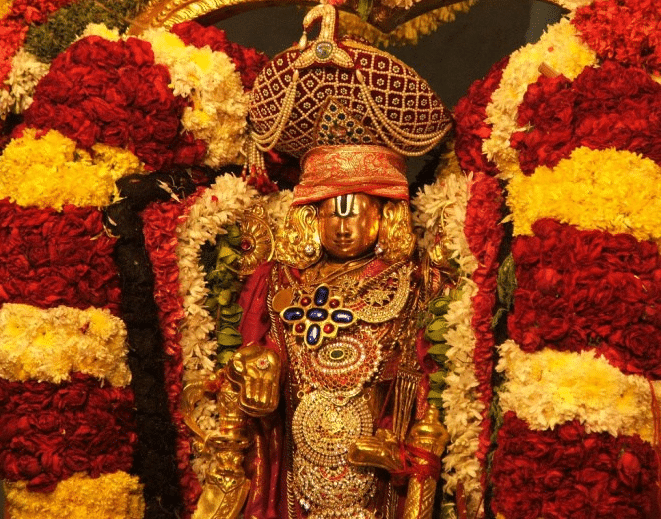
Lord Kalki is one of the most fascinating personalities in Hindu mythology— because unlike Rama or Krishna, he hasn’t been born yet. He is the tenth and final avatar (incarnation) of Lord Vishnu and Hindus believe he will appear in the future to save the world from evil.
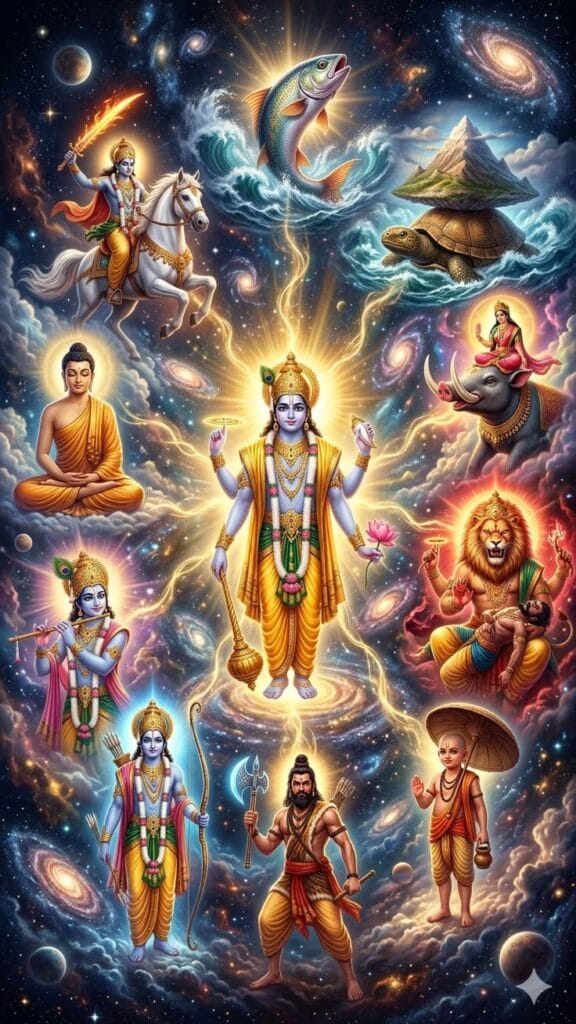
Ten Avatars of Lord Vishnu (Dashavatara)
In Hinduism, Lord Vishnu is the protector of the universe. Whenever evil becomes too powerful, Lord Vishnu is believed to take birth on earth in a new form, called an avatar, to restore balance. These ten forms together are called the Dashavatara.
The ten avatars, in order, are:
- Matsya – the fish
- Kurma – the tortoise
- Varaha – the boar
- Narasimha – half-man, half-lion
- Vamana
- Parashurama – the warrior with an axe
- Rama – the hero of the Ramayana
- Krishna – the hero of the Mahabharata
- Buddha
- Kalki – the future avatar, yet to come
Looking for a room in Tirupati?
Lord Kalki stands apart from the other nine because his story hasn’t happened yet — it’s a prophecy, not a past event.
Who Is Lord Kalki and What Does the Name Mean?
The name Kalki comes from the Sanskrit word “Kalka,” meaning dirt or filth. So Kalki roughly translates to “the destroyer of filth” or “the one who removes darkness and ignorance.” It fits perfectly with his role: he arrives specifically to clean up a world that has become deeply corrupt.
The Prophecy: Lord Kalki’s Birth Story
According to the Kalki Purana, Vishnu Purana, and Bhagavata Purana, Lord Kalki will be born in a village called Shambhala (or Sambhala), to a Brahmin priest named Vishnuyasha and his wife Sumati.
As a young man, Kalki is taught the sacred scriptures covering dharma (righteousness), karma (action), artha (prosperity), and true knowledge. He also receives military training under Parashurama — interestingly, another avatar of Vishnu — preparing him to become a skilled warrior.
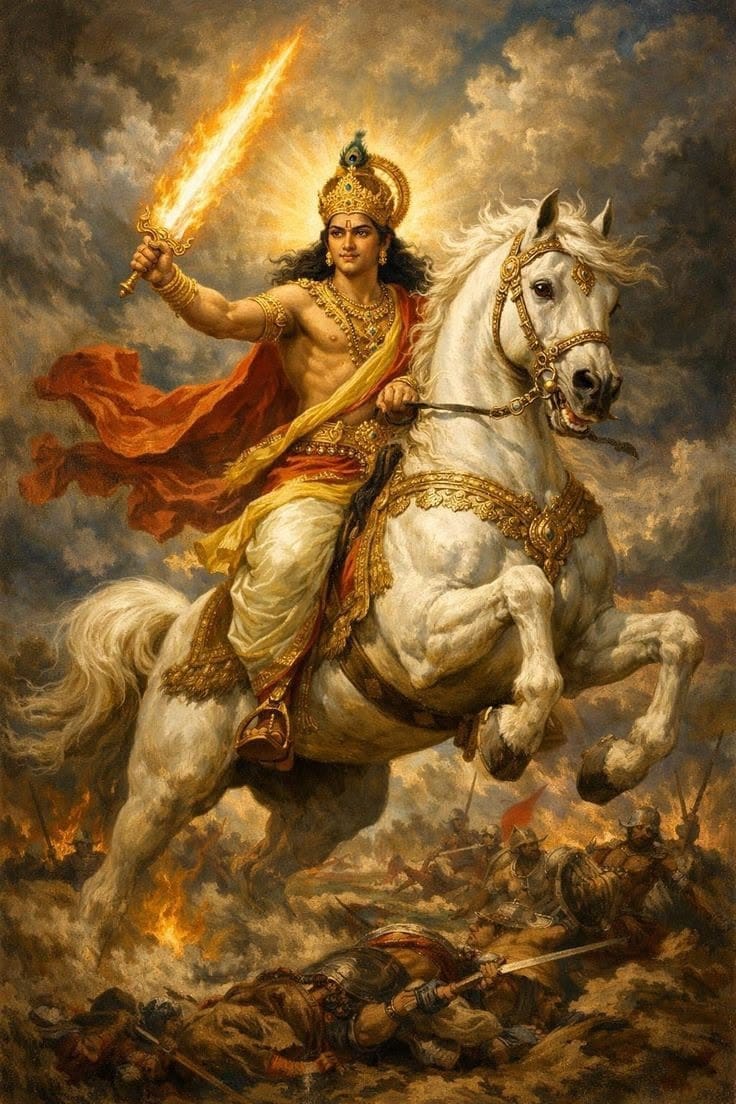
Pleased by Kalki’s devotion, Lord Shiva blesses him with three divine gifts:
- Devadatta – a pure white horse, said to be a form of the divine bird Garuda
- A flaming, jewel-handled sword – his main weapon against evil
- Shuka – an all-knowing parrot who understands the past, present and future
Lord Kalki’s Mission: Ending Kali Yuga
Hindu time is divided into four ages, or yugas, and we are currently believed to be living in the last and darkest one — the Kali Yuga. This age is marked by dishonesty, greed, injustice, and a general decline in moral values.
The scriptures describe specific signs that will appear near the end of Kali Yuga: rulers becoming corrupt and cruel, people forgetting sacred knowledge, and dharma (righteousness) being reduced to almost nothing. When conditions become this bad, Kalki will appear, riding Devadatta and wielding his blazing sword, to destroy evil kings and wicked forces.
Once his mission is complete, Kali Yuga will end, and a new golden age called Satya Yuga will begin — a time of truth, peace, and righteousness.
According to traditional Hindu timekeeping, Kali Yuga began around 3102 BCE and is meant to last 432,000 years in total, which means (by this calculation) Lord Kalki’s arrival is still hundreds of thousands of years away. Many devotees see this less as a literal countdown and more as a timeless promise: no matter how dark things get, balance always returns eventually.
Real Kalki Temples in India
Even though Kalki hasn’t arrived yet, devotees have built temples in his honor — a unique example of faith in a future event.
Kalki Mandir, Jaipur: Built nearly 300 years ago by King Jai Singh II, this is considered the first known temple dedicated to Lord Kalki. It even has a white marble horse statue at its entrance, representing Devadatta.
Shri Kalki Dham, Sambhal: Sambhal, in Uttar Pradesh, is traditionally believed to be Lord Kalki’s prophesied birthplace. In February 2024, Prime Minister Narendra Modi Ji laid the foundation stone for the Shri Kalki Dham temple here. The temple is being built on around 5 acres of land under the guidance of Acharya Pramod Krishnam, and is planned to include ten sanctums (garbh grihas) — one for each of Lord Vishnu’s ten avatars. Construction is expected to continue over several years, with completion targeted around 2030.
These temples show that Lord Kalki isn’t just an ancient story — it’s a living tradition that continues to shape culture, faith, and even public life in India today.
Also Read : Why Lord Venkateswara Swamy is Not in Dashavatara’s