Why Lord Venkateswara Is Not One of the Dashavataras
If you have ever visited Tirumala or kept a Balaji idol at home, you already know Lord Venkateswara is worshipped as Lord Vishnu himself. So a natural question comes up: if he is Vishnu, why isn’t he on the famous list of ten avatars, the Dashavataras?
The short answer is this: Venkateswara is not missing from the list by mistake. He belongs to a different category of divine form altogether. Let’s understand this in simple words.
First, What Is the Dashavatara?
“Dashavatara” means the ten (dasha) descents (avatara) of Lord Vishnu. Each one appeared for a specific reason, usually to defeat a particular evil force or restore balance in the world during that time. The ten are:
- Matsya – the fish who saved the Vedas and humanity from a great flood
- Kurma – the tortoise who supported a mountain during the churning of the ocean
- Varaha – the boar who lifted the earth out of cosmic waters
- Narasimha – the half-man, half-lion who protected his devotee Prahlada
- Vamana – the dwarf who humbled the king Mahabali
- Parashurama – the warrior sage who restored order with his axe
- Rama – the ideal king of the Ramayana
- Krishna – the divine guide of the Bhagavad Gita
- Buddha – counted as the ninth avatar in most traditions
- Kalki – the avatar still to come, who will appear at the end of Kali Yuga
Each of these ten has one thing in common: they came, completed one clear mission, and their story ended (or in Kalki’s case, is yet to begin). That pattern matters a lot for understanding where Lord Venkateswara fits.
So Why Isn’t Lord Venkateswara on This List?
Here are the main reasons, for simple understanding.
Looking for a room in Tirupati?
1. He Is Not a “Mission and Exit” Avatar
Every Dashavatara appeared to solve one specific problem, and once the job was done, that form’s active role in the story was over. Rama ruled and eventually left the earth. Krishna lived his full life and departed at the end of the Dwapara Yuga.
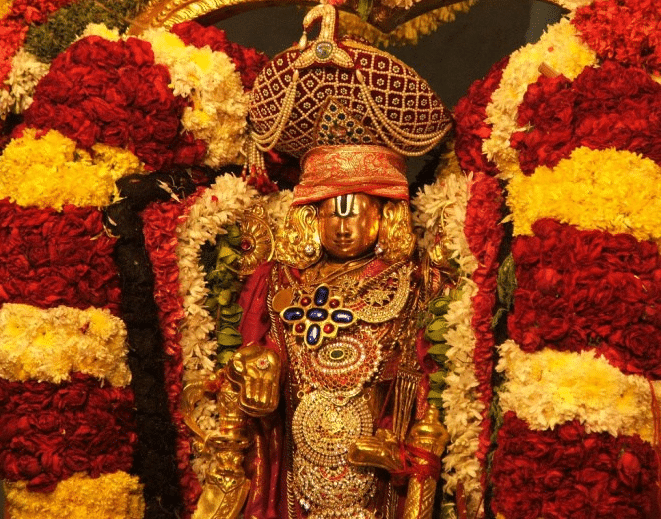
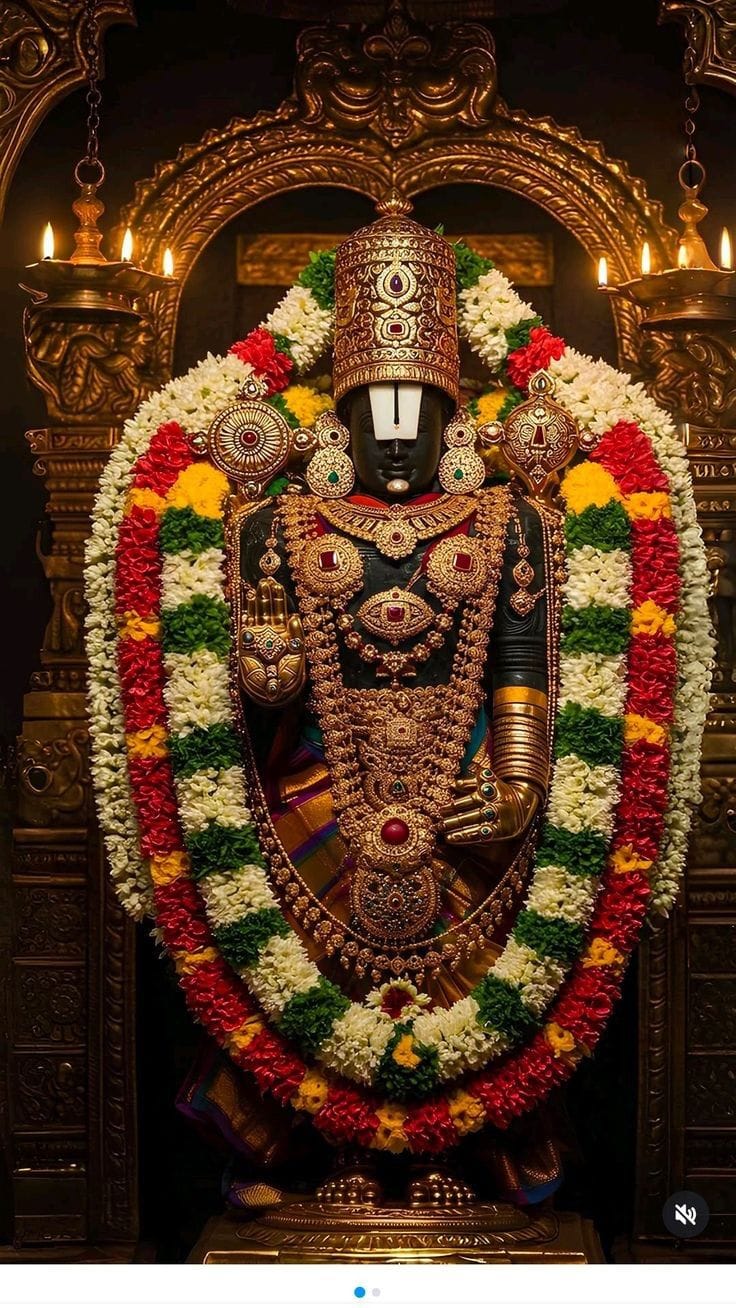
Venkateswara does not follow this pattern. According to popular belief, he chose to stay at Tirumala permanently, still available to devotees even today. He isn’t a temporary appearance for one task — he is a continuing presence.
2. He Is Considered a “Swayambhu” Form, Not a Birth-Based Avatar
Most of the ten avatars have a birth story: Rama was born to King Dasharatha, Krishna was born to Devaki, and so on. Venkateswara’s idol at Tirumala, however, is believed to be swayambhu, meaning self-manifested. Tradition says this form was not born or created by human hands — it simply appeared. This sets him apart from the classic birth-and-mission pattern of the ten avatars.
3. He Represents a “Purna” (Complete) Form for a Different Purpose
Hindu tradition sometimes speaks of two kinds of divine appearances:
- Purna avatars – a complete, full manifestation of Vishnu’s power, holding nothing back
- Amsa avatars – a partial manifestation, where only a portion of Vishnu’s power is present for a specific task
Venkateswara is widely regarded as a Purna, or complete, presence of Vishnu — not a partial descent for a single battle or event. His purpose isn’t to defeat one enemy. It is simply to remain reachable, so that ordinary people going through the difficulties of Kali Yuga always have somewhere to turn.
4. His Purpose Is Grace, Not War
Look closely at the ten avatars, and you will notice most of them involve some kind of confrontation: a demon to defeat, a wrong to correct, a battle to win. Venkateswara’s role is different. He simply stands on the hill at Tirumala, offering blessings and refuge to anyone who comes. There is no enemy to fight in his story — his “mission” is quiet, constant grace rather than a dramatic rescue.
5. He Is Already Present During Kali Yuga — Kalki Hasn’t Arrived Yet
This point often confuses people. Kalki, the tenth avatar, is the one linked to Kali Yuga in the Dashavatara list — but Kalki is prophesied to appear only at the end of this age, to finally end corruption and start a new cycle of time.
Lord Venkateswara, on the other hand, is believed to have already descended and settled at Tirumala during Kali Yuga, long before Kalki’s prophesied arrival. He isn’t replacing Kalki or standing in for him. He is a separate, ongoing form of Vishnu meant to comfort and guide people through this difficult age while they wait.
Does This Mean Lord Venkateswara Is “Less Than” the Ten Avatars?
Not at all. Being outside the Dashavataras list doesn’t make him a smaller or lesser form of God. If anything, most devotees and scriptural traditions (including references in the Varaha Purana and Bhavishyottara Purana) describe him as a full and complete manifestation of Vishnu — not a limited or partial one.
Think of it this way: the Dashavataras is a specific, closed list of ten world-saving missions. Venkateswara belongs to a different category entirely — the eternal, accessible presence of Vishnu that isn’t tied to one single historic event. Both are genuinely Vishnu. They simply serve different roles in tradition.
A Quick Comparison
| Point | The Ten Dashavataras | Lord Venkateswara |
|---|---|---|
| Purpose | Solve one specific crisis | Offer ongoing grace and refuge |
| Origin | Usually born through a mother/family | Swayambhu (self-manifested) |
| Duration | Appeared, completed the mission, then departed | Believed to remain permanently at Tirumala |
| Time period | Tied to a specific yuga and event | Present throughout Kali Yuga |
| Nature | Some are Purna, some are Amsa | Considered a Purna (complete) form |
In Simple Words
Lord Venkateswara simply doesn’t fit the pattern the ten avatars follow — a birth, one clear mission, and an ending. Instead, he represents Vishnu’s complete, self-manifested, and permanent presence, here specifically to bless and guide people through the Kali Yuga, for as long as this age lasts.
That is really the heart of his story: while the ten avatars came to solve the problem of their time, Venkateswara chose to simply stay, so that anyone, anytime, could reach him.
Frequently Asked Questions
Is Lord Venkateswara an avatar of Vishnu? Yes. He is widely regarded as a complete (Purna) form of Vishnu, though he is not one of the ten Dashavataras.
Is Venkateswara the same as Kalki, since both are linked to Kali Yuga? No. Kalki is prophesied to appear only at the end of Kali Yuga to end corruption. Venkateswara is believed to have already descended and settled at Tirumala during this age, well before Kalki’s arrival.
Is Lord Balaji an avatar of Krishna? No. Both Venkateswara and Krishna are separate, complete forms of Vishnu. Neither one comes from the other — they both trace back to Vishnu directly.
Does not being in the Dashavatara make Venkateswara less powerful or less important? No. Tradition treats him as a full and complete manifestation of Vishnu. The Dashavatara is simply a specific list tied to ten historic missions; Venkateswara’s role falls outside that structure, not beneath it.
What does “swayambhu” mean? It means self-manifested. Tradition holds that the main idol at Tirumala was not carved by human hands but appeared on its own, adding to its spiritual significance.